Where you are leaving from
ZIP or city sets drive times and which mountains sit in your range.
About WhereToSkiNext
Pick the right mountain for your ski day, from where you actually live
You have a dozen mountains in range and one day to ski. WhereToSkiNext ranks them from where you actually live so you can pick one hill with confidence instead of juggling tabs.
Why this exists
Founder story
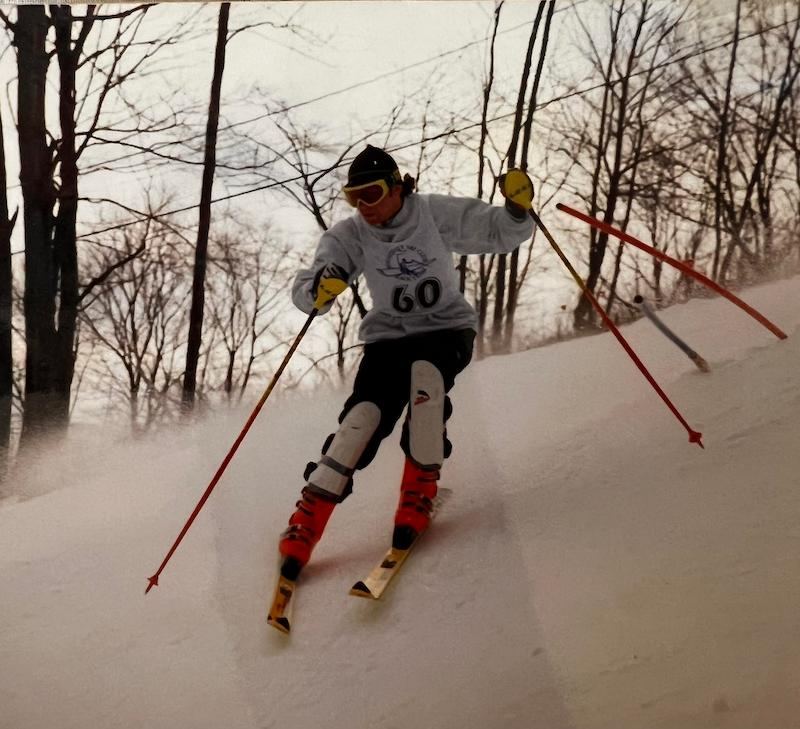
I grew up skiing Bousquet in the Berkshires. I raced there through high school and fell hard for what a small mountain feels like: no high-speed quads, no resort village, just skiing. That stuck.
When friends ask where to go this weekend, I never just toss a name. I think about where they drive from, kids or not, mellow day vs vertical day. Family trips work the same. I want my kids to see it all, from ancient lifts and great waffles to big resorts with real infrastructure.
Even when you Google ski mountains, you still do the work: forecasts on one site, pass coverage on another, drive times in your head. Search keeps sending the same famous ten.
That's the gap I kept hitting, so I built WhereToSkiNext. It's not a phone book and not a frozen best-of list. It takes your situation and points you at a mountain that actually fits. Might be Stowe, might be a small indie you never heard of that was exactly what you needed.
I’m not trying to outsmart someone who has skied every local hill for ten years. I’m trying to help the skier staring at five tabs make a better decision. WhereToSkiNext brings snow, drive time, crowds, pass coverage, price, and mountain fit into one clear recommendation.
The problem
The ski-day decision (Friday night is when it hurts most)
You have a dozen mountains in range. Some picked up snow; some will be slammed on Saturday; some sit on your pass. A Tuesday powder day still means choosing among three hills on your pass and guessing which one is worth the drive. The usual move is too many browser tabs, half-read snow reports, and a guess. Sometimes you burn half a day when better snow was an hour closer.
This site replaces that with your ranked list: forecast snow, how far you will drive, pass match, crowd outlook, terrain fit, and the kind of day you want. Move a slider and the list updates. No account. No mystery “best resort in America” list, just what fits you and the day you picked.
Flow
How it works
About thirty seconds from ZIP to a shortlist.
Pass, distance, and what you care about
Epic, Ikon, Indy, or indie ticket; day trip vs extended drive; snow vs crowds vs price. Your call.
One top pick plus a sortable table
A clear recommendation once you add a start point, and a full ranking you can sort and dig into.
Coverage
What we cover
More than destination headlines. We include big mountains and local hills so a Saturday near Boston can mean Ski Ward and Wachusett, not only Stowe vs Killington. Each area carries vertical, trails, acreage, average snowfall, terrain mix, ticket price, night skiing, terrain park, and pass type (Epic, Ikon, Indy, independent).
350
U.S. ski mountains
36
States
4
Major pass types
Live
Forecast each session
Scoring
How we rank options for you
Each mountain gets a fit score for your search, shown on a 0 to 100 scale. It is not a permanent rating. Typical East Coast day-trip scores land in the 30s to 70s. A packed day always takes a cut, even if you said crowds do not matter. 70+ is a standout day, not the usual mid-pack. The number updates for your location, the latest forecast, and your sliders.
Six inputs feed that score:
Snow quality
Open-Meteo forecast and recent snow, turned into an on-the-ground surface estimate for your ski day, then scored against how much snow you asked for. Fresh storm snow counts more than older snow; Powder Day raises the bar versus Any Snow. A touch of seasonal reliability is included too.
Skiability
Forecast temperature, wind, and precipitation at elevation: how pleasant and skiable the day feels. Rain, high wind, and harsh cold pull this down even when snowfall looks good. Mountain size is not part of skiability; that lives under mountain fit.
Mountain fit
Vertical, acreage, trails, and lifts. If you pick big or local hills, fit steers that way. On a default search it is an enough-mountain prior: a 300-ft local hill loses to a real ski mountain, then the term flattens once the hill is big enough for a full day (about 1,150 ft and 300 acres). Killington does not keep beating Attitash on size alone.
Drive time
Real road routing via OSRM, with fast haversine fallback. Closer scores higher. Your day-trip vs extended-drive choice also decides which mountains stay in the pool. Any distance still includes far-away hills. Drive credit keeps falling past 4 hours so a 7-hour drive and a 40-hour drive are not scored the same.
Value
Walk-up ticket price, unless your pass covers the mountain. Then price stops counting against a place you ski free or nearly free. Expensive walk-up loses points when cheaper options exist. Setting a pass filter is what turns Epic or Ikon into a ticket credit. Pass logos on the mountain do not.
Crowd outlook
A model that estimates lift-line pressure for that mountain on that day. It blends metro gravity, pass density, lift capacity, day of week, holidays, and weather demand. Busy days reduce the overall score so a zoo cannot fully cancel out great snow.
You control how much each factor matters with the preference sliders. Crank snow and relax value for a powder bias; favor small hills and low crowds for quiet days. Turning drive all the way up also lets local-class hills win Top Pick, because that control means you want the close hill. The ranking follows your settings, not one formula for everyone.
Differentiator
A note on crowd prediction
Most ski sites tell you what conditions are like right now: yesterday’s snow, today’s lifts, this morning’s grooming. None of that answers whether the lot is full by 8:30 on Saturday.
WhereToSkiNext estimates how busy a mountain will feel on the day you pick. The score folds in how many people live within driving distance, whether the mountain sits on a major pass with millions of holders, what lift networks can absorb, holiday weeks, and whether powder or perfect bluebird will spike demand. We tune it against real-world patterns: Killington should read busy on a typical Saturday, not light-moderate; a small independent should read differently from a huge destination even at similar mileage.
It is a modeled estimate, not a live lift-line camera. It is still meaningfully better than nothing, and almost nobody else in consumer ski tools is trying to answer that exact question.
Transparency
Where the numbers come from
Snow
Forecasts from Open-Meteo (open, model-based). We use the grid forecast for each mountain, not a summit station request, and refresh when you use the site. Scoring can lapse those grid temps toward the mountain when on-mountain cold matters. For snow quality we turn recent and forecast snowfall into an on-the-ground surface estimate for your ski day, scored against your snow preference.
Drive times
Road routing via OSRM when available. If routing is slow or unavailable, we fall back to distance-based estimates and mark those times with ~ so you know.
Mountain facts and pass affiliation. Resort stats like pass affiliation (Indy, Ikon, Epic, or independent), lift counts, vertical, acres, and key details are compiled from resort operator materials and pass network listings, then cross-checked against independent sources where possible. One reference we use heavily is Storm Skiing Journal's Big Dumb Mastersheet, one of the most thorough independent datasets in ski media. If you are not already reading Stuart Winchester's newsletter, you should be.
Limits worth knowing
- Forecasts move. Double-check the morning you head out.
- We are not replacing the mountain’s own snow report or patrol calls.
- Crowd outlook is predictive, not a live lift count. Treat it as a strong signal, not a guarantee.
- On a willing-to-drive search, Top Pick cannot be a local-class hill. Those hills still rank in the table and can fill Best Local.
Independence and paid placements. Rankings are not pay-to-play. When a mountain or local business buys a placement, it is labeled and sits in its own partner zone (for example above a state ranking table). Paid placements do not change scores or the order of organic results. A partner mountain still sits in its real scored position in the table.
FAQ
Common questions
Is this better than asking a local?
A longtime local will know details no model can fully capture: which lot fills first, which lift line moves, which run holds cold snow. Most skiers do not have a trusted local at every mountain within driving range. WhereToSkiNext is built for the skier comparing several unfamiliar mountains and trying to make a better decision quickly. It is a faster, more informed starting point than opening several websites and guessing. It is not a replacement for someone who has skied every local hill for ten years.
How does the crowd forecast work?
The crowd read predicts crowd pressure rather than measuring live turnstile counts. It models who each mountain draws (nearby metros, pass network, destination pull), how each day of the week and the holiday calendar loads it, what fresh snow and clear-sky days do to demand, and how well its lifts and parking absorb a rush. Treat it as a strong signal, not a guarantee.
Can a mountain pay to rank higher?
No. Ranking is never for sale. Paid placements are labeled and sit outside the organic ranking. They do not change scores or order. We do not use affiliate links on the site today.
Does this work for weekdays and trips, not just weekends?
Yes. Pick any ski day in the hero controls: weekday, Friday, Saturday, Sunday, or a specific date. The score updates for that day, including holiday weeks and powder Saturdays when crowds matter most.
How can I provide some feedback?
Always happy to hear how I can improve this site. Join the Discord group to share ideas with other skiers and snowboarders.
Passes
Pass guides by region
Picking Epic, Ikon, or Indy is a huge spring decision. Coverage varies by region and the passes barely overlap. We publish regional breakdowns so you see what you get before you buy.
Start with the full Epic vs Ikon vs Indy comparison, or jump to a region:
Contact
Report a fix or say hi
Wrong data, a missing mountain, or a sharp idea? Send it. This is mostly a one-person build; useful feedback gets handled. Resort details improve as the season rolls.
Email me: trip@wheretoskinext.com
Business or resort inquiry? Use the Partners page.
Your next ski day, ranked from your ZIP
Set your start point, ski day, pass, and priorities. Get the list you wish you had before you go.